Certifications & Exams

Transport Canada Flight Dispatcher Exams and Certification in Canada

“Aviation is this beautiful industry where we’re constantly learning a variety of interesting and challenging subjects. It is a field of passion, and we love to help others join it. We simplify and organise this knowledge, share our experiences and make sure our students have maximum support before entering the field.” — Sam, Flight Dispatcher Instructor
That’s the honest starting point for anyone eyeing a career in airline operational control in Canada. The pathway runs through two generic examinations set by Transport Canada: Flight Dispatcher Licence – Operations (FDOPS) and Flight Dispatcher Licence – Meteorology (FDMET). Knowing what each exam covers, how it’s marked and what comes after makes the journey far less intimidating.

Understand the Transport Canada Flight Dispatcher Exams

The Transport Canada flight dispatcher exams test the generic knowledge you need before moving into operator-specific training. Transport Canada currently lists two examinations for the Flight Dispatcher Licence: FDOPS, covering operations, and FDMET, covering meteorology. The training duration is 6 days in class.
The exams are built around knowledge that connects directly to operational control. You’ll need a working grasp of flight planning, aircraft performance, weather information, regulations, charts, operational procedures and safety considerations — not just the ability to recite them.

What Are the Transport Canada Exams?

The Transport Canada Exams required for dispatcher certification include two separate multiple-choice examinations:

FDOPS Exam Preparation for Flight Operations

The FDOPS exam focuses on the operational knowledge flight dispatchers use every day. Transport Canada's current examination description covers atmospheric effects in flight, aircraft performance, charts and graphs, critical surface contamination, wake turbulence, flight manuals, volcanic ash, and airmanship or rules of thumb.
“Students go through the flight planning exercises that require determining whether an aircraft will have sufficient runway for takeoff and how much fuel is required for the entire flight.”- Dario, Experienced Aviation Professionals
Passing FDOPS takes more than memorizing definitions — it means in understanding how these subjects connect during real flight planning and operational decision-making. That's the difference between studying for a test and preparing for the job.

FDMET exam Build Strong Meteorology Knowledge

The FDMET exam assesses aviation meteorology knowledge. Its current subject description covers the atmosphere, atmospheric pressure, altimetry, temperature, moisture, stability and instability, clouds, turbulence, wind, jet streams, air masses, fronts, frontal weather, icing, thunderstorms, surface-based layers, meteorological services, aviation weather reports and forecasts, and weather maps or prognostic charts.
For candidates, the real skill is connecting weather information to operational decisions — not just naming cloud types. Learning to read aviation weather information and recognise what it means for flight planning strengthens both exam performance and future dispatch judgment.

Flight Dispatcher Certification in Canada The Complete Pathway

Passing both generic exams is a major milestone, but it isn’t the finish line. Under Canadian requirements, a candidate must pass the generic examinations before beginning air-operator-specific training. That subsequent training covers the procedures, aircraft types, routes and operational control system relevant to the individual operator.
After completing that specific training, the candidate must meet the applicable competency-check requirements. A Flight Dispatcher Certificate is issued once the prescribed requirements have been met. Transport Canada remains the licensing authority throughout — training providers exist to prepare candidates for the knowledge and operational requirements along the way.

Why Train With Flight Dispatch Training
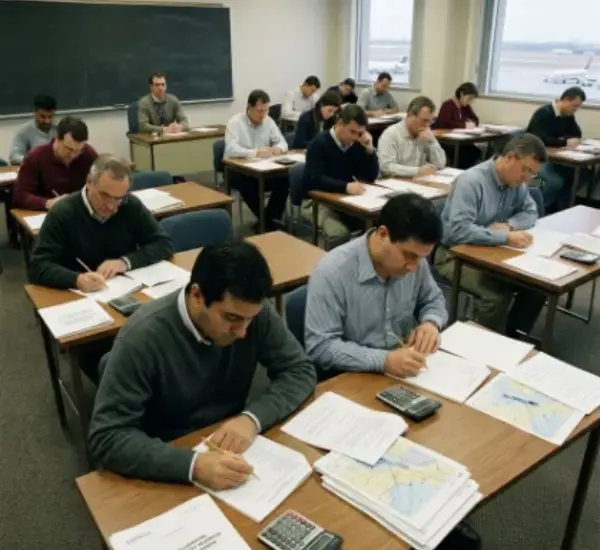
This programme is run by Sam and Dario, aviation professionals who’ve sat these exams and worked operational control themselves. The course covers operational meteorology, aircraft performance, flight planning, fuel planning, airline dispatch procedures, safety, regulatory compliance and operational control, built specifically around Canadian airline operations.
01 Built by people who've done the job: Sam and Dario teach from direct operational experience, not a textbook script.
02 Canadian-specific, not generic: every module maps to the current FDOPS and FDMET subject lists.
03 Real scenarios, not just theory: classroom examples come from actual dispatch decisions.
04 A structured path: a clear sequence to follow, with direction at each stage.
05 Built for career changers too: paced for people coming into aviation from another field.

Aviation Training with Skypath Aviation
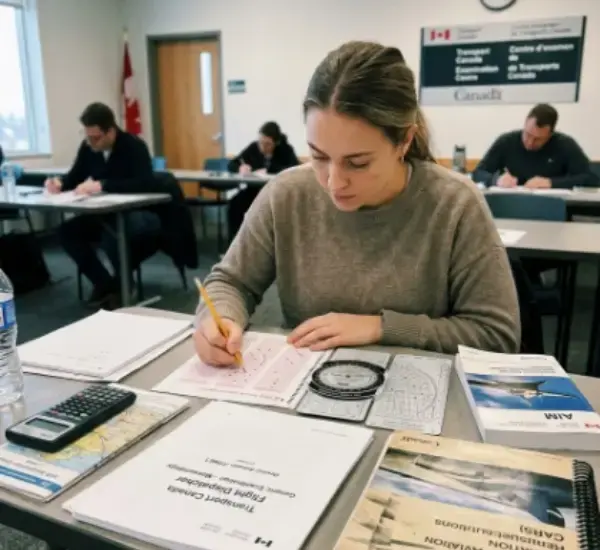
Skypath Aviation runs the training environment behind this programme, built around practical industry knowledge rather than exam tricks. It covers the subjects that matter for airline operations: meteorology, flight planning, fuel management and dispatch procedures, taught with the job in mind.
If you’re researching flight dispatcher certification in Canada, pairing structured training with a clear understanding of the regulatory pathway helps you set realistic expectations from the start. The goal here isn’t just a pass mark — it’s building knowledge you’ll actually rely on once you’re the one making the call.

Exam Booking and What Candidates Should Know

Candidates book their FDOPS and FDMET examinations directly through Transport Canada’s examination system. Transport Canada’s current online booking system lists both Flight Dispatcher Licence examinations at no examination fee, with a maximum duration of 3.5 hours each and a minimum passing score of 70%. Always check Transport Canada’s booking page for the latest information before selecting a date, as scheduling details can change.
Given the breadth of both papers, build a revision schedule, flag your weaker subjects early, and practise applying the technical knowledge rather than just reviewing it. That’s where most of the study time should go.

Build Confidence for Your Aviation Career

The Transport Canada flight dispatcher exams establish a strong foundation of generic knowledge before you move into operator-specific training. Passing FDOPS and FDMET is a significant step, but it’s one part of a longer professional pathway.

Strong Foundation

Build essential knowledge in flight operations, planning and aviation meteorology.

Career Advancement

Move confidently toward operator-specific training and professional certification.

Real-World Knowledge

Develop the practical understanding needed to support safe and efficient flight operations.
With focused preparation, experienced instruction and a clear understanding of the certification pathway, you can approach FDOPS and FDMET with real confidence — not just hope.
“It is incredibly rewarding to see our graduates as the dispatcher on an Operational Flight Plan. To safely release a flight and monitor it requires a lot of dedication and hard work.”

— Sam, Flight Dispatcher Instructor

Ready to Begin Your Flight Dispatcher Journey?

Contact Flight Dispatch Training today to discuss course availability, exam preparation and the next steps towards your Canadian aviation career.

Frequently Asked Questions

1. What are the Transport Canada flight dispatcher exams?
The Transport Canada flight dispatcher exams are two generic examinations required in the Canadian flight dispatcher qualification pathway. FDOPS covers operations, while FDMET covers meteorology. Candidates must pass both before progressing to the applicable air-operator-specific training and subsequent certification requirements.
The FDOPS exam assesses operational knowledge required for flight dispatch. Subjects include aircraft performance, charts, atmospheric effects, critical surface contamination, wake turbulence, flight manuals, volcanic ash and airmanship. Strong preparation focuses on understanding how these topics apply to real operational decisions.
The FDMET exam covers aviation meteorology, including atmospheric pressure, temperature, moisture, clouds, turbulence, wind, fronts, icing, thunderstorms and aviation weather information. Candidates should understand not only meteorological concepts but also how weather conditions can influence flight planning and operational control.
Flight dispatcher certification in Canada requires more than passing written examinations. Candidates must pass the generic examinations, complete the applicable air-operator-specific training and satisfy competency-check requirements. Transport Canada issues the Flight Dispatcher Certificate after the prescribed requirements have been completed.
A structured preparation programme helps you organise technical subjects, understand examination requirements and identify weaker areas. FDMET exam and FDOPS exam preparation should include aviation meteorology, flight planning, performance, regulations and operational procedures, supported by focused revision.