Flight Dispatcher Certification Canada
The Complete Path to Becoming a Licenced Dispatcher
What Flight Dispatcher Certification in Canada Actually Requires
Transport Canada is the licencing authority throughout the entire process. Before a candidate can begin air-operator-specific training, they need to pass two generic examinations for the Flight Dispatcher Licence: FDOPS (Flight Dispatcher Licence – Operations), and FDMET (Flight Dispatcher Licence – Meteorology). Passing both is not the finish line; it is the entry ticket to the next stage.
Once the generic exams are completed, operator-specific training covers the procedures, aircraft types, routes and operational control systems specific to whichever airline you will be working for. This stage tends to run considerably deeper than the generic exams, since it is built around the airline’s actual fleet and route network. After that training, candidates must meet the applicable competency-check requirements before Transport Canada issues the actual Flight Dispatcher Certificate.
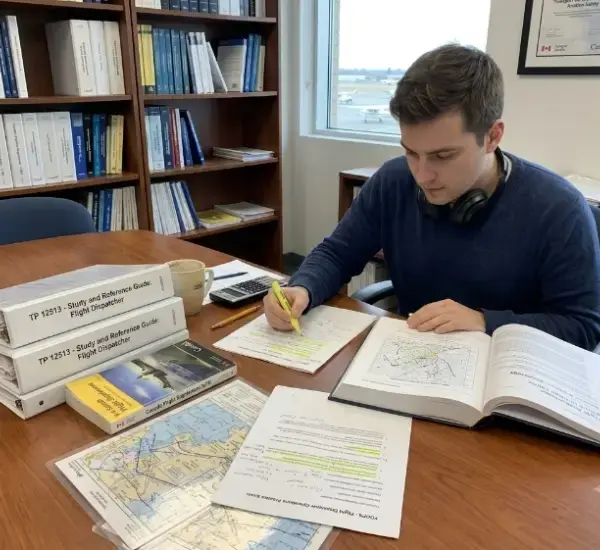
What Are the Transport Canada Exams?
The Transport Canada Exams required for dispatcher certification include two separate multiple-choice examinations:
The Transport Canada Flight Dispatcher Exams You'll Need to Pass
The Transport Canada flight dispatcher exams test generic foundational knowledge that applies across the industry.
FDOPS covers topics such as atmospheric effects in flight, aircraft performance, charts and graphs, critical surface contamination, wake turbulence, flight manuals, volcanic ash, and airmanship.
FDMET covers the atmosphere, atmospheric pressure, altimetry, temperature, moisture, stability, clouds, turbulence, wind, jet streams, fronts, icing, thunderstorms, meteorological services and weather charts.
Both exams are booked directly through Transport Canada's examination system, with a maximum duration of 3.5 hours each and a minimum passing score of 70%.
You can also write the exams at our locations on 2 specific dates after the course, thus avoiding having to book. If those dates don’t work or you live in another city, then you are welcome to book the exams on your own.
Choosing a Transport Canada Flight Dispatcher Course Before You Sit the Exams
Walking into FDOPS and FDMET without professional preparation is an incomplete way to learn the material. A structured Flight Dispatcher course organizes the subject matter into something manageable; flight planning, aircraft performance, fuel calculations, weather interpretation and regulatory knowledge, rather than leaving candidates to piece together a self-study plan from scattered resources.
The value is not just passing on the first attempt. Candidates who train properly tend to retain the material in a way that actually carries into operator-specific training, where real dispatch decisions are made under time pressure with an actual aircraft and passengers involved.
Why an Aviation Operations Course Builds a Stronger Foundation
An Aviation Operations & Flight Dispatch Course built around current FDOPS and FDMET subject lists gives candidates something a textbook alone cannot. You obtain the ability to connect separate topics the way a working dispatcher actually does. Knowing runway performance figures in isolation is not the same as working out, live, whether a specific aircraft has sufficient runway and fuel for a specific flight under specific conditions.
That connective thinking is exactly what separates candidates who scrape a pass, compared to candidates who walk into operator-specific training already competent with how the pieces fit together.
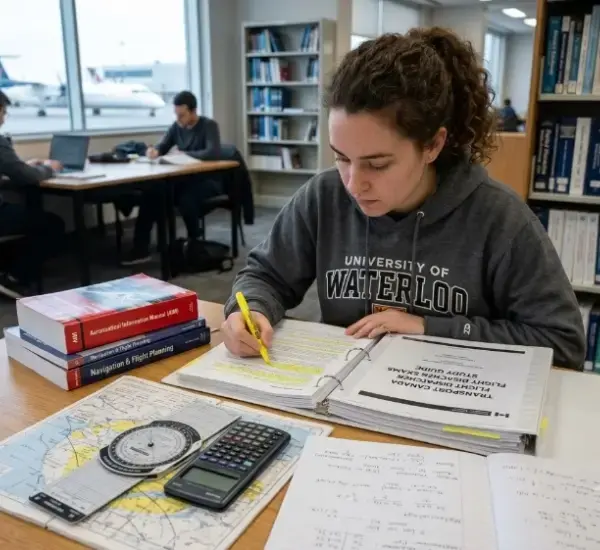
Training With Skypath Aviation
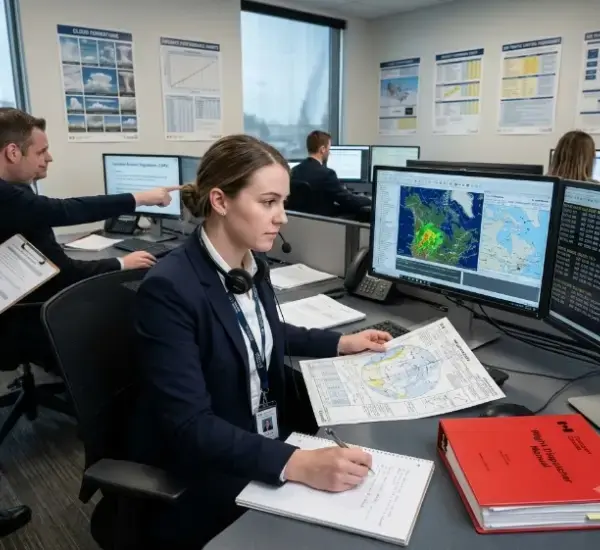
What Happens After You Are Certified
Once your Certification is complete, the real work starts.
Certified dispatchers share legal responsibility with the pilot-in-command for the safety of a flight, a role that carries genuine weight. For a lot of graduates, this is the reason they got into aviation in the first place. Reaching that point takes real preparation and hard work. It is a genuinely achievable pathway for anyone willing to put the study time in and take the process seriously from the start.
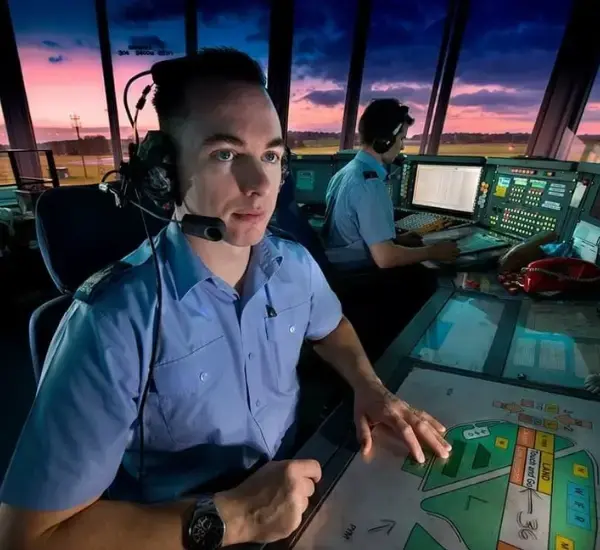
Start your Flight Dispatcher Certification Canada journey with Skypath Aviation today
Frequently Asked Questions
1. How long does the full certification pathway usually take?
Timelines vary by candidate, but most people move through exam preparation, sitting FDOPS and FDMET within a few weeks. Then you go into paid on the job operator-specific training for another 3-6 months.
Flight Dispatcher Certification in Canada timelines overall depend on study consistency and how quickly operator training becomes available.
2. Do I need prior aviation experience to start?
No. Prior aviation experience helps but is not required. Career changers regularly complete the flight dispatcher course successfully, provided they put in consistent study and review time. Instructors pace material for newcomers just as carefully as for those in aviation-adjacent roles.