- By flightdispatchtraining
- August 24, 2026
- Comments (0)
Ever wonder what happens before a plane even reaches the runway? Long before boarding starts, a flight dispatcher has mapped the route, checked the weather, worked out fuel loads, and flagged any operational risks. It’s a role built on sharp judgement as much as technical know-how. Flight dispatcher training in Canada gives aspiring professionals exactly that grounding, pairing aviation science with the split-second decision-making airlines rely on daily.
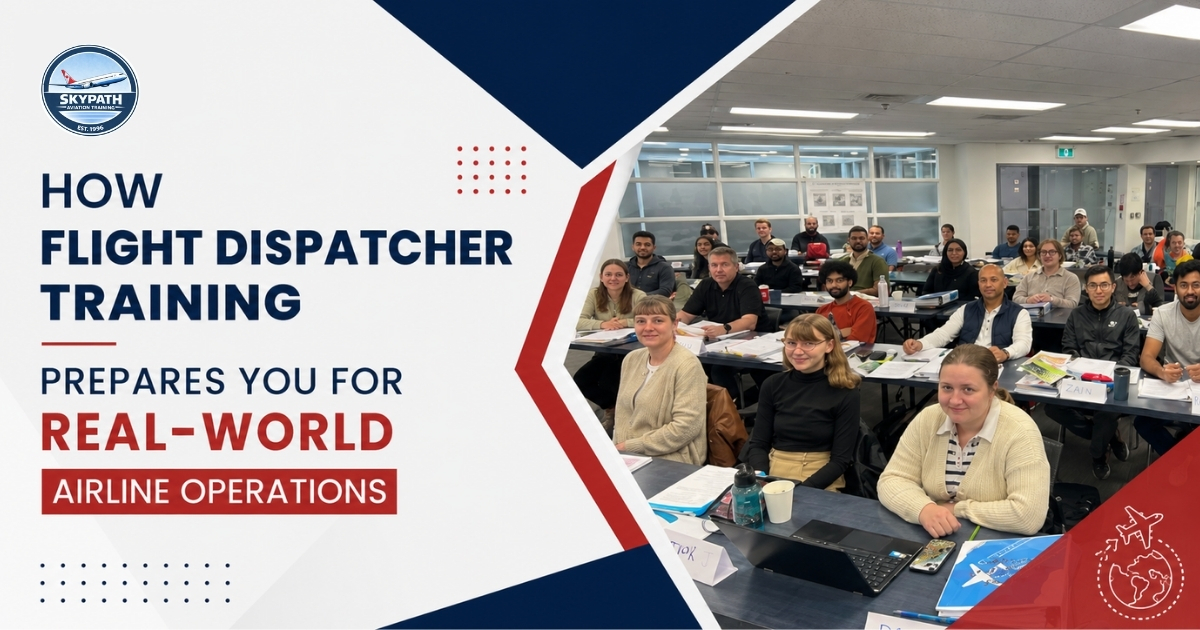
At Skypath Aviation, students don’t just sit through theory. They work through scenarios that mirror what airlines actually deal with, closing the gap between the classroom and real dispatch work.
How Does Flight Dispatcher Training in Canada Prepare You for Airline Operations?
Flight dispatcher training in Canada builds airline-ready skills through regulatory knowledge, operational planning, weather analysis, flight monitoring, and hands-on dispatch exercises. This practical approach gives students the confidence and problem-solving ability needed to support safe, efficient flights from day one.
Building the Foundations of Airline Flight Operations
Every flight starts with planning. Dispatchers weigh aircraft performance, airport conditions, weather, airspace restrictions, fuel needs, and operational limits before a flight is authorized.
A solid flight dispatcher course in Canada walks students through these responsibilities and shows how each decision affects safety and compliance. Coursework typically covers:
- Aviation legislation
- Aircraft systems and navigation
- Meteorology and flight planning
- Operational control and fuel management
These subjects form the technical backbone dispatchers need inside a commercial airline environment.
Gaining Real-World Experience Through Practical Scenarios
Airlines expect dispatchers to think on their feet — classroom theory alone won’t cut it when conditions shift in minutes.
That’s why training programs in Canada lean on exercises built around real headaches: sudden weather changes, airport closures, aircraft performance limits, flight delays, and diversion planning. These scenarios sharpen analytical thinking and show how operational calls affect safety and efficiency.
Strengthening Weather Interpretation Skills
Weather is arguably the biggest wildcard in flight operations. Dispatchers must read aviation weather reports, forecasts, wind data, icing conditions, turbulence, and visibility accurately before signing off on a flight plan.
It’s not just about reading numbers — students learn how weather shapes aircraft performance, alternate airport choices, and fuel planning. Given Canada’s varied weather, this skill grows in value on the job.
Mastering Flight Planning Technology and Operational Tools
Modern airline operations run on digital systems. During aviation dispatcher training in Canada, students get hands-on with flight planning methods, operational documentation, and aviation charts, making it easier to pick up airline-specific software once employed.
Building Communication and Decision-Making Confidence
A dispatcher works closely with pilots, maintenance crews, air traffic services, and operations teams. Clear communication keeps everyone aligned for safe, timely decisions.
Training pushes students to explain their reasoning clearly, prioritize safety, and stay calm under pressure.
Understanding Canadian Aviation Regulations
Regulatory compliance sits behind every dispatch decision. Flight dispatcher training in Canada covers the operational standards governing commercial flight dispatch, including flight release, operational control, and safety management.
Preparing for Long-Term Career Opportunities
Graduating from a respected Flight Dispatch Training program opens the door to genuine airline career paths, not just a certificate. Graduates typically move into roles such as airline flight dispatcher, flight operations assistant, and airline operations coordinator, with many progressing toward dispatch coordination, flight following, and crew scheduling assistance as they gain experience. As airlines modernize, qualified dispatch professionals remain essential, and employers want candidates who can contribute from week one.
Final Thoughts
Great flight dispatchers blend technical expertise with practical judgement, strong communication, and a genuine commitment to safety. Quality flight dispatcher training in Canada builds these skills through learning that mirrors modern airline operations.
If you’re serious about a career in aviation dispatch, Skypath Aviation offers a 7-day in-class program in Markham, Ontario, to help you gain confidence and move into a professional flight dispatch role.
FAQs
1. How long does flight dispatcher training in Canada take?
Skypath Aviation’s flight dispatcher course runs for 7 days of in-class instruction, from 9:30 AM to 5:30 PM, in Markham, Ontario. This intensive format covers aviation meteorology, a structured review day, and operational dispatch training in a single focused week.
2. What qualifications do I need to enrol?
Most schools require a minimum education level and strong English skills. Some programs include an entrance assessment before admission into a flight dispatcher course, so check specific provider requirements ahead of applying.
3. Can I train as a dispatcher with no aviation background?
Yes. Most programs are built for beginners and introduce aviation concepts gradually before moving into operational planning. Aviation dispatcher training gives students a structured path to build industry-relevant knowledge, regardless of prior experience.
4. Is flight dispatcher training in Canada online or in person?
At Skypath Aviation, the program is delivered entirely in person at our Markham, Ontario, training location. Interactive classroom learning lets students engage directly with instructors, take part in operational case studies, and ask questions in real time throughout the training week.
5. Does completing training improve job prospects?
Completing recognised training signals technical competence and operational readiness to employers. Graduates with strong regulatory knowledge and hands-on scenario experience tend to stand out when applying for entry-level flight dispatch roles across Canada’s airlines.