- By flightdispatchtraining
- August 3, 2026
- Comments (0)
Most people associate aviation with pilots, but every successful flight depends on a skilled team working behind the scenes. Flight dispatchers are a vital part of that team. They help plan flights, monitor weather, calculate fuel requirements, and support pilots in making safe operational decisions. As airlines continue growing, the need for qualified dispatch professionals remains strong, making Flight Dispatcher Training in Canada an attractive career path for aspiring aviation professionals.
With Skypath Aviation, students learn from experienced industry professionals through practical, airline-focused training designed to prepare them for real operational environments – rather than just classroom examinations.
Why Flight Dispatcher Training in Canada Is Worth Considering?
A career in flight dispatch offers something many aviation professionals are looking for-a chance to play an important operational role without spending years building flight hours. Every commercial flight requires careful planning before departure. It’s a career built on responsibility, accuracy, and problem-solving. As airline operations become increasingly complex, dispatchers are becoming more valuable than ever. That’s one reason more students are choosing Flight Dispatcher Training in Canada to build specialised careers that combine technical knowledge with real operational decision-making.
Many recognised programmes also prepare students for the Transport Canada Flight Dispatcher examinations, giving them the regulatory knowledge expected by Canadian airlines while helping them understand how dispatch decisions affect everyday flight operations.
Learn From Professionals Who Have Worked in Airline Operations
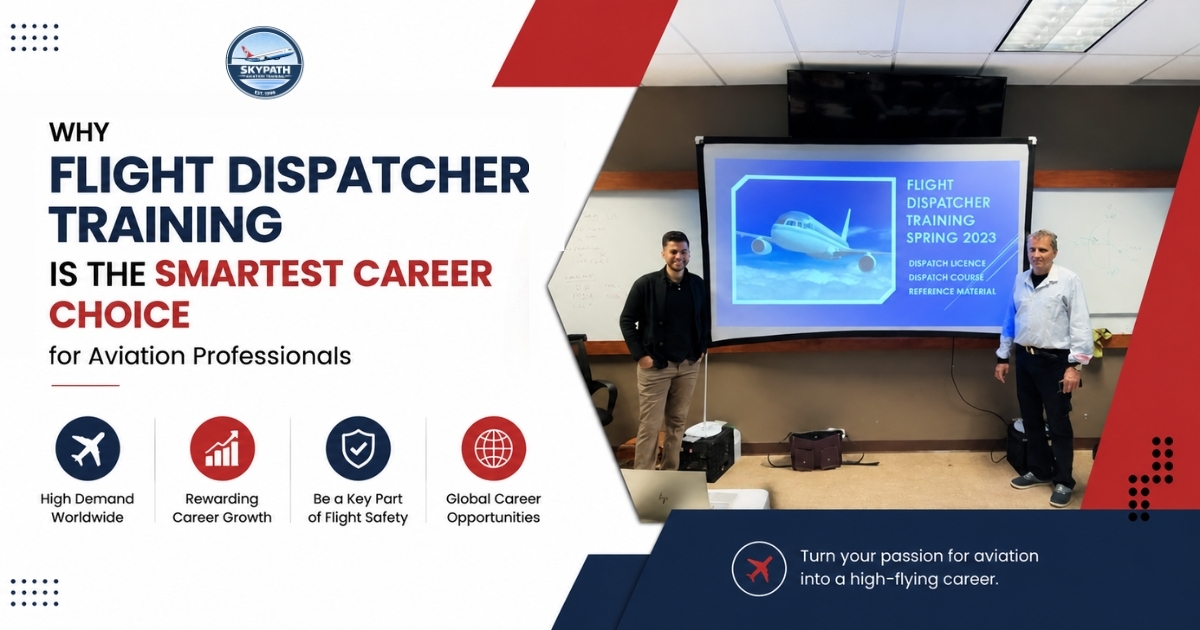
At Skypath Aviation, students benefit from instructors who bring decades of operational experience into the classroom. The instructional team includes professionals with Air Canada operational experience as well as a Transport Canada Flight Test Examiner, allowing students to learn directly from people who understand the industry’s expectations. Instead of relying only on theory, instructors use practical examples drawn from real airline operations. They explain how dispatchers respond to changing weather, operational delays, aircraft limitations, and unexpected situations that arise during daily flight planning.
Combined with preparation for the Transport Canada Flight Dispatcher examinations, this real-world instruction gives students a stronger foundation before entering the aviation industry. For more detail on how the programme is structured, take a look at the Course, Transport Canada Exams, and Instructors pages.
Real Airline Scenarios Prepare You for Real Responsibilities
One of the biggest differences between average training programmes and exceptional ones is practical exposure. Flight dispatch is not a profession where every day follows the same routine. Weather changes quickly. Operational priorities shift. Airspace restrictions appear unexpectedly. Aircraft performance calculations may need to be adjusted.
Dispatchers must be able to evaluate information, communicate clearly with flight crews, and make confident decisions while maintaining safety as the highest priority. That’s why practical learning matters so much. Rather than simply memorising procedures, students work through realistic airline dispatch scenarios that reflect the challenges they will eventually encounter in professional operations centres. This hands-on approach helps develop confidence alongside technical knowledge.
Passing Exams Is Only Part of the Journey
Successfully completing the Transport Canada Flight Dispatcher examinations is an important milestone. But passing an examination alone doesn’t automatically prepare someone for airline operations. Professional dispatchers need to think critically, remain calm under pressure, communicate effectively, and make informed operational decisions throughout the working day.
If you’re serious about building a career in airline operations, choosing the right training provider is one of the most important decisions you’ll make. It also helps to look at the Course structure, the Transport Canada Exams process, and the instructors leading the programme. A little research today can help you choose a training pathway that supports your long-term aviation goals.
Career Growth Goes Beyond Your First Dispatcher Role
One of the biggest advantages of choosing flight dispatch is that it offers room to grow. Many professionals begin their careers as flight dispatchers and gradually move into positions involving Operations Control, Flight Operations Coordination, Safety Management, Training, or other leadership roles within airline operations. The knowledge gained in dispatch provides a strong understanding of how airlines function, making it a valuable foundation for long-term career development.
Salary potential can also improve with experience, additional responsibilities, and the type of airline or aviation organisation you work for. While earnings vary depending on the employer, location, and operational role, dispatch professionals who continue building their expertise often find opportunities for career progression over time.
Why Canada Is a Trusted Destination for Flight Dispatch Training?
Students who complete a Flight Dispatcher Course in Canada benefit from training that aligns with Transport Canada requirements while introducing them to the operational practices used by commercial airlines. This combination of classroom learning and practical application prepares graduates for the demands of real-world airline operations.
Programmes are also structured around Transport Canada’s regulatory requirements, giving students a solid grounding in operational planning, safety, compliance, and airline communication before they enter the workforce.
Why Practical Training Matters More Than Ever?
Modern airline operations move quickly. Dispatchers often need to assess changing weather conditions, review operational notices, adjust flight plans, and communicate with flight crews within tight timeframes. Technology provides valuable support, but informed human judgement remains essential. That’s why practical training continues to be one of the strongest investments an aspiring dispatcher can make.
At Skypath Aviation, students don’t simply study aviation concepts-they learn how those concepts are applied in real airline environments. Practical exercises, instructor guidance, and operational scenarios help bridge the gap between classroom knowledge and professional responsibilities. This approach allows students to build confidence while developing the critical thinking skills expected in airline operations centres.
What Our Students Say
Nothing tells the story of the programme better than the people who’ve completed it. Here’s a small selection of genuine reviews from our Google Business Profile:
“Sam and Dario are incredibly knowledgeable and possess a rare, genuine talent for teaching.” – Allan Siguenza, Google review
“I had a great experience completing my dispatch training at Sky Path Aviation.” – Manish Tyagi, Google review
“It was really worth attending the wonderful course by Dario and Sam.” – Alen Thomas, Google review
“This was an incredibly well-organised, in-depth, and intensive programme.” – Nadia Verdugo, Google review
A Career Built on Responsibility and Continuous Learning
Flight dispatch is a profession where learning never really stops. Every operational day presents different weather systems, route changes, aircraft considerations, and scheduling challenges. These changing conditions encourage dispatchers to continue developing their knowledge throughout their careers.
Students who prepare thoroughly for the Transport Canada Flight Dispatcher examinations while gaining practical operational experience are often better equipped to transition into professional dispatch environments because they understand both the regulatory framework and the realities of airline decision-making. If you’re weighing up your next career move, the Careers page covers the profession in more depth, and the Contact page is there if you’d like to speak with the training team directly.
Final Thoughts
Aviation offers far more opportunities than many people realise, and flight dispatch is one of the most important careers behind every successful flight. Choosing Flight Dispatcher Training in Canada means developing practical knowledge, sound operational judgement, and the real-world skills airlines actually look for. It’s about learning from experienced aviation professionals, preparing for the Transport Canada Flight Dispatcher examinations, and building the confidence to support safe airline operations in the real world.
For aspiring aviation professionals looking for practical, industry-focused education delivered by experienced instructors, Flight Dispatch Training provides a learning environment designed to prepare students for the challenges and responsibilities of modern airline dispatch.
FAQs
1. What does a flight dispatcher do?
Flight dispatchers are responsible for planning flights, monitoring weather, calculating fuel requirements, reviewing aircraft performance, and coordinating with pilots before departure. They help ensure every flight operates safely and efficiently while complying with aviation regulations, making them an essential part of every airline’s operational team.
2. Why should I choose Flight Dispatcher Training in Canada?
Choosing Flight Dispatcher Training in Canada allows students to develop practical aviation knowledge while preparing for Transport Canada standards. Quality programmes combine classroom instruction with realistic airline scenarios, helping aspiring dispatchers build the technical skills, confidence, and operational mindset needed for professional airline environments.
3. Is flight dispatch a good long-term aviation career?
Yes. Flight dispatch offers excellent long-term career potential for people interested in airline operations. With experience, professionals may progress into operational management, safety, training, or flight operations roles. The profession also provides continuous learning opportunities as airline technology, regulations, and operational procedures continue to evolve.
4. What will I learn in a Flight Dispatcher Course in Canada?
A Flight Dispatcher Course in Canada typically covers flight planning, aviation weather, aircraft performance, operational control, navigation, weight and balance, aviation regulations, and communication procedures. Many programmes also prepare students for the Transport Canada Flight Dispatcher examinations using practical airline-based operational scenarios.
5. Who should consider Aviation Dispatcher Training in Canada?
Aviation Dispatcher Training in Canada is ideal for aspiring aviation professionals, recent graduates, career changers, and airline employees looking to move into operational roles. The training develops practical decision-making, regulatory knowledge, and technical skills that support long-term careers within commercial aviation and airline operations.