- By flightdispatchtraining
- September 17, 2026
- Comments (0)
Somewhere behind every on-time departure sits a dispatcher who already fought the weather, the fuel math, and the routing puzzle hours earlier.
Airline dispatcher training in Canada is built to turn that behind-the-scenes work into a repeatable skill, not a guessing game.
This blog walks through what the coursework actually covers, how it lines up with Transport Canada’s certification path, and what a real airline expects from you on day one.
What Does Flight Dispatcher Training in Canada Actually Teach You?
Flight dispatcher training in Canada teaches flight planning, aircraft performance limits, meteorology, and fuel calculations under Canadian Aviation Regulations.
Graduates learn to share operational control with the pilot-in-command, which is exactly how the role works inside a real airline.
Inside the Curriculum: From Weather Charts to Flight Plans
Coursework typically blends meteorology, NOTAM interpretation, aircraft performance data, and dispatch-planning software into one working system.
Students practise building full flight plans, factoring alternate airports, fuel reserves, and route restrictions the way a live operations desk would.
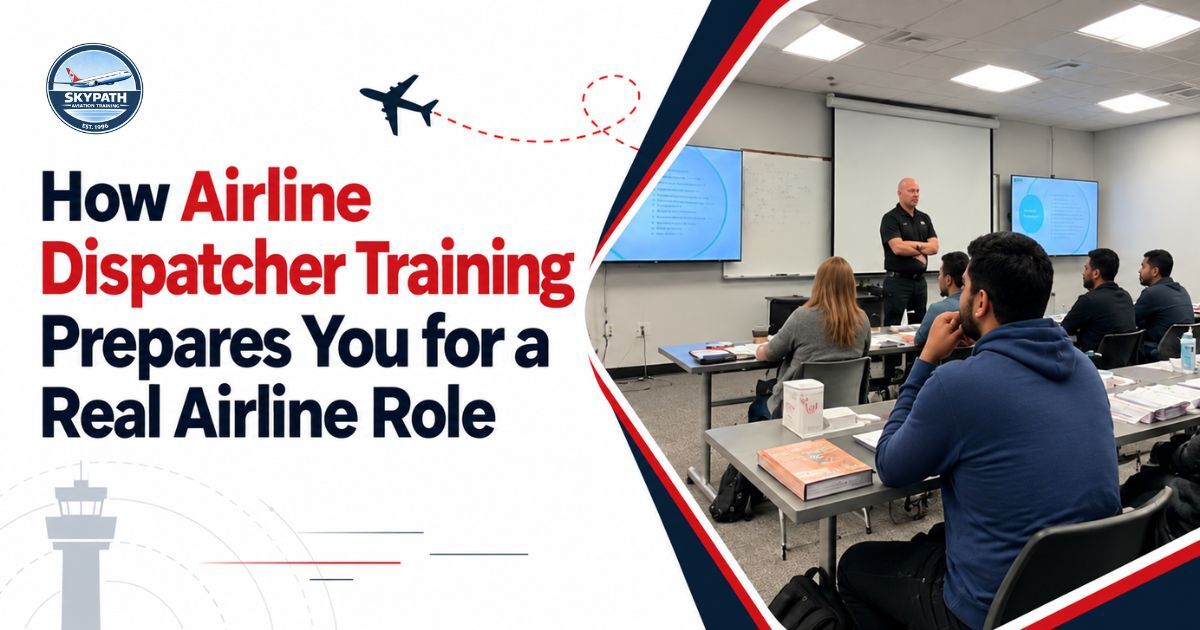
This is where airline dispatcher training in Canada stops being theory and starts resembling an actual shift, right down to the paperwork and time pressure.
Who Should Consider a Flight Dispatcher Course in Canada?
People drawn to aviation but not necessarily to flying tend to fit this role well – detail-focused, calm under pressure, comfortable with regulation-heavy work.
A flight dispatcher course in Canada suits career-changers from logistics, meteorology, or air traffic backgrounds just as much as fresh aviation graduates.
Strong written English, comfort with numbers, and the ability to stay decisive under pressure matter more here than a pilot’s licence or prior flight hours.
Meeting Transport Canada’s Certification Standards
Training programmes prepare candidates for the Transport Canada Flight Dispatch Generic Examinations, known as FDOPS and FDMET.
Most airlines also expect a Restricted Operator Certificate – Aeronautical (ROC-A), and candidates must be at least 21 years old before holding the licence.
Understanding CARS 705 operational control rules early makes the jump from classroom to a Type A or B carrier considerably smoother, since these regulations shape almost every daily decision a dispatcher makes.
Some candidates also pursue prior flight-following or Flight Service Specialist experience, which employers often treat as a bonus rather than a requirement at entry level.
From Classroom Scenarios to Operations Desk Reality
Good programmes simulate irregular operations: delays, diversions, maintenance limitations, and curfew extensions handled under genuine time pressure.
That mirrors what a strong dispatcher training programme should ultimately produce – someone who can brief a flight crew clearly, coordinate with maintenance control, and recommend a cancellation without hesitating when conditions demand it.
Choosing the Right Flight Dispatcher Training Provider
Not every programme carries the same depth. Look for instructors with live dispatch experience and course content mapped directly to the Transport Canada exam syllabus.
Skypath Aviation, based in Markham, Ontario, is one provider building its programme around exactly this kind of exam-aligned, operations-first structure.
Your Flight Plan to a Dispatcher Career Starts Here
Choosing solid airline dispatcher training in Canada is the difference between passing an exam and actually being ready for an operations desk on day one.
The right course pairs regulatory knowledge with the judgement airlines rely on daily, and that combination rarely comes from self-study alone.
If you’re weighing your options, Flight Dispatch Training’s programme structure is a useful benchmark for what thorough airline dispatcher training in Canada should include before you commit to a provider.
FAQs
1. How long does airline dispatcher training in Canada typically take?
Most programmes run between six months and one year, depending on full-time or part-time study. Airline dispatcher training in Canada usually combines classroom instruction with simulated flight-planning exercises, followed by preparation for the Transport Canada FDOPS and FDMET examinations before graduates can apply for dispatch roles.
2. What exams do I need to pass to become a flight dispatcher in Canada?
Candidates must pass Transport Canada’s FDOPS and FDMET generic examinations. Most flight dispatcher training in Canada programmes build their entire curriculum around these two exams, covering meteorology, flight planning, and regulations, alongside preparing students for the Restricted Operator Certificate – Aeronautical required by most airline employers.
3. Can I complete a flight dispatcher course in Canada part-time or online?
Many providers offer flexible or hybrid formats, though practical flight-planning exercises usually need some in-person or live-instruction component. A genuine flight dispatcher course in Canada should still cover the full FDOPS and FDMET syllabus regardless of delivery format, without cutting corners on regulatory depth.
4. What's the difference between a flight dispatcher and an air traffic controller?
A flight dispatcher shares legal operational control of a flight with the pilot-in-command, handling planning, fuel, and routing well before departure. An air traffic controller instead manages aircraft separation and sequencing in real time from the ground, once flights are already airborne, taxiing, or approaching a runway.
5. What salary can flight dispatchers expect in Canada?
Entry-level dispatchers typically earn a modest starting salary that rises quickly with experience, type ratings, and seniority at larger carriers. Regional airlines generally pay less than major national carriers, though most dispatchers see steady increases within their first few years on an operations desk.