- By flightdispatchtraining
- October 7, 2026
- Comments (0)
Every airline flight leaves the gate with two people legally responsible for it. One sits in the cockpit. The other works from an operations centre, often hundreds of kilometres away.
That second person is the flight dispatcher. If the role appeals to you but you have no aviation background, flight dispatcher training for beginners is where your journey starts.
You don’t need to be a pilot. You need curiosity, a head for detail and the right foundation. Here’s what that foundation looks like from the very first day.
What Skills Does Beginner Flight Dispatch Training Teach First?
Flight dispatcher training for beginners starts with aviation weather, flight planning, fuel calculations, aircraft performance and Canadian aviation regulations. Together, these skills prepare you for the Transport Canada FDOPS and FDMET exams and for the safety decisions dispatchers make every shift.
Aviation Weather Interpretation: Your First Core Skill
Weather shapes almost every dispatch decision. That’s why most courses start here.
You’ll learn to read METARs, TAFs, NOTAMs and weather charts. More importantly, you’ll learn what they mean for a real flight, such as icing along the route or a line of thunderstorms near the destination.
This is also the heart of FDMET, one of the two flight dispatcher exams set by Transport Canada. It covers fronts, jet streams, turbulence, icing, stability and weather charts.
Flight Planning, Fuel and Aircraft Performance Basics
Next comes the math behind every safe departure. Don’t worry, it’s practical rather than abstract.
In good flight dispatcher training for beginners, you’ll learn how to:
- Plan routes using airways, charts and navigation data
- Calculate fuel for the trip, reserves and alternate airports
- Check aircraft performance against runway length, weight and conditions
- Account for hazards like contaminated runways and wake turbulence
Strong flight dispatcher training connects these topics. Knowing a runway figure is one thing. Deciding whether a specific aircraft can safely depart with today’s load and weather is the real job.
Canadian Aviation Regulations and Operational Control
Dispatchers don’t just plan flights. They help keep the whole operation legal and safe.
In Canada, airline dispatchers work under CAR 705 and the Commercial Air Service Standards (CASS 725). Under a Type A operational control system, the dispatcher shares responsibility for a flight’s safety with the pilot-in-command.
Flight dispatcher training for beginners introduces this framework early. That way, you understand why each rule exists, not just what it says.
Communication and Decision-Making in Airline Operations
Technical knowledge only goes so far. Dispatchers also coordinate with flight crews, air traffic control, maintenance and crew scheduling teams.
You’ll practise thinking through irregular operations, like a diversion, a delayed departure or a sudden weather change. Calm, clear judgment matters more than speed.
Many Canadian airlines also ask for a Restricted Operator Certificate with Aeronautical Qualification (ROC-A), the radio licence used for aviation communication.
How Training Leads to Flight Dispatcher Exams and Certifications
Here’s the pathway most beginners follow in Canada:
- Complete a structured preparation course
- Pass FDOPS (operations) and FDMET (meteorology), each with a minimum score of 70%
- Get hired and complete an airline’s operator-specific training
- Pass a competency check to hold your Flight Dispatcher Certificate
That last step surprises many newcomers. Flight dispatcher certifications in Canada are linked to the air operator you work for. Passing the exams makes you eligible for operator training rather than finishing the process.
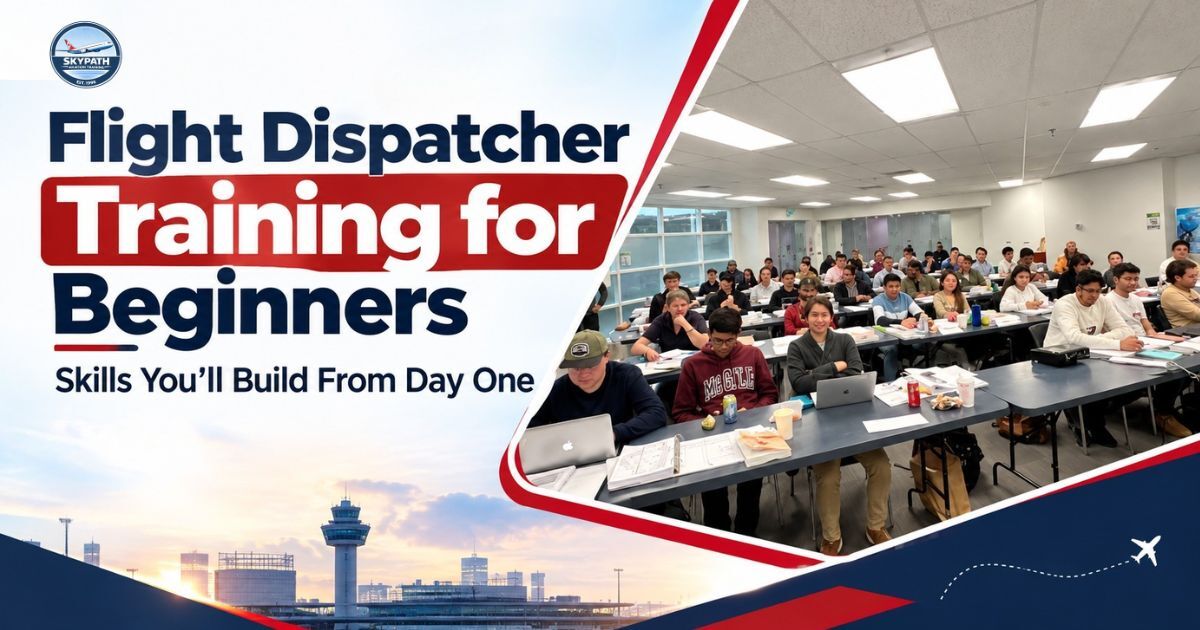
A focused course, such as the six-day classroom program delivered by Skypath Aviation Training in Markham, Ontario, helps you organize dense material before writing the flight dispatcher exams. It also includes aviation radio operator certification.
That preparation pays off later too. Airlines expect new hires to arrive with the fundamentals behind flight dispatcher certifications already in place.
Clear Skies Ahead: Your First Step Into the Operations Room
Flight dispatch rewards people who enjoy solving problems and owning outcomes. The skills you build early, from weather and fuel planning to regulations and communication, stay with you for your whole career.
The right flight dispatcher training for beginners turns unfamiliar jargon into confident habits. If you’re ready to begin, Flight Dispatch Training offers instructor-led flight dispatcher training built around real airline operations and Transport Canada exam preparation. Check the next intake and take your first step toward the operations room.
FAQs
1. Do I need aviation experience to start dispatcher training?
No. Most beginner courses assume you’re starting from scratch, and career changers enrol regularly. What matters far more is steady weekly study time and a willingness to learn new terminology. Good flight dispatcher training paces weather, planning and regulations so newcomers can keep up with confidence.
2. What are the FDOPS and FDMET exams?
They’re the two generic flight dispatcher exams set by Transport Canada. FDOPS covers operations topics such as aircraft performance, charts, wake turbulence and runway contamination. FDMET focuses on aviation meteorology and weather. You must pass both, each with at least 70%, before starting operator-specific dispatcher training.
3. Who issues the Flight Dispatcher Certificate in Canada?
Your certificate is tied to the air operator that hires you. After passing FDOPS and FDMET, you complete that airline’s approved training and a competency check. Flight dispatcher certifications are therefore employer-linked, which is why passing the exams alone doesn’t let you dispatch commercial airline flights.
4. Is the math in dispatcher training difficult?
Not for most people. The calculations involve fuel, weight, time and distance rather than advanced mathematics. You’ll mostly work with charts, tables and formulas you apply repeatedly. With guided practice and plenty of worked examples, beginners usually find the numbers manageable well before exam day arrives.
5. What jobs can I apply for after completing training?
Graduates often target roles in flight dispatch, flight following, systems operations control and crew scheduling support. Airlines usually hire candidates who have passed FDOPS and FDMET, then provide operator training. Many job postings also list a valid ROC-A radio licence as a requirement for dispatch positions.