- By flightdispatchtraining
- October 14, 2026
- Comments (0)
Every flight that leaves the gate has two people responsible for it. One sits in the cockpit. The other sits in a dispatch office, watching weather, fuel and routes, and signing off on whether the flight should go at all.
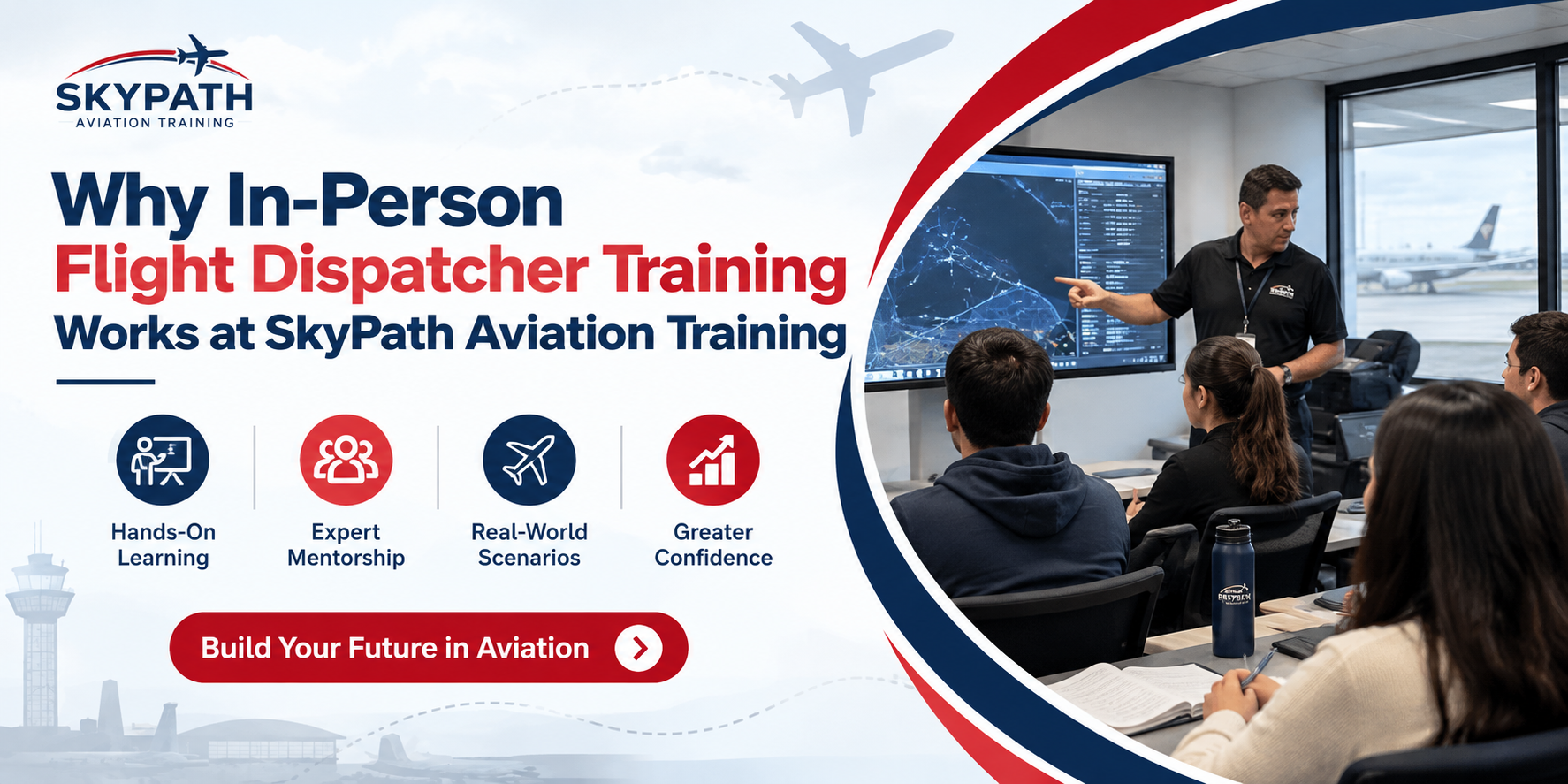
That second job is learnt best with people around you. If you’re comparing options for a flight dispatcher course in Canada, here’s why a classroom still beats a screen for most students.
Is Classroom Learning the Better Way to Take a Flight Dispatcher Course in Canada?
For most people, yes. Dispatch work depends on reading weather charts, running fuel and performance numbers, and making decisions under time pressure.
An instructor-led flight dispatcher course in Canada lets you practise those skills live, ask questions as they come up and get corrected straight away, which online modules rarely manage.
What Airline Dispatch Work Really Demands?
Dispatchers share operational control of a flight with the captain. They plan routes, check NOTAMs, calculate fuel and keep watching conditions after take-off.
None of it happens in neat, separate chapters. A forecast change can alter the fuel plan, which changes the alternate, which affects the release.
That chain is far easier to grasp when an instructor maps it out and shows where your numbers went wrong.
How Classroom Practice Prepares You for Transport Canada Flight Dispatcher Exams?
Candidates write two Transport Canada flight dispatcher exams: FDMET, which covers meteorology, and FDOPS, which covers dispatch operations and regulations.
Both reward understanding over memorising. In a room with an experienced instructor, you can stop mid-lesson and ask why a TAF is read a certain way, or why a performance limit applies on one runway and not another.
Passing the exams is one step. Full flight dispatcher certification in Canada is completed through the airline that hires you, under its approved training programme and supervised dispatch experience.
Inside the Intensive One-Week Dispatch Programme
At SkyPath Aviation Training, the course runs as an intensive, instructor-led week in Markham, Ontario. The material is built around Transport Canada flight dispatcher exams and day-to-day airline work, covering:
- aviation meteorology and NOTAM interpretation
- aircraft performance, fuel calculations and route planning
- dispatch procedures and airline coordination
- Canadian aviation regulations and operational safety
- operational communication, including aviation radio operator certification
A week is short, so being in the room matters. Small mistakes get picked up the same day, not a fortnight later.
Who Gains Most from an In-Person Dispatch Course?
A classroom-based flight dispatcher course in Canada suits career changers, recent graduates and aviation staff moving across from ground handling or customer service.
It also helps anyone who learns by doing. Working through a flight plan alongside classmates often teaches as much as the lecture itself.
International students should note one practical point: you’ll need a valid visitor visa, study permit or work permit for Canada to attend. The course itself doesn’t qualify you for a visa.
If flight dispatcher certification in Canada is your long-term goal, choose training that mirrors the pressure and teamwork of a real dispatch office.
Your Seat in the Dispatch Office Starts in the Classroom
Dispatch is a team job, so learn it with a team, guided by instructors with airline operations experience.
Flight Dispatch Training delivers a classroom-based flight dispatcher course in Canada that prepares you for the FDMET and FDOPS exams and for the job beyond them. Check the next intake dates and secure your place on a flight dispatcher course in Canada that treats dispatch as the hands-on profession it is.
FAQs
1. How long does it take to become a flight dispatcher in Canada?
The classroom course can be completed in about a week. After that, you’ll sit the Transport Canada written exams and, once hired, finish your airline’s approved training and supervised dispatching. The overall timeline depends on exam dates and on how quickly you secure a dispatch role.
2. Which exams do I need to pass?
You’ll need to pass two Transport Canada flight dispatcher exams: FDMET, focused on aviation meteorology, and FDOPS, covering operations and regulations. Both are written tests. Solid preparation means truly understanding the reasoning behind each answer, not simply memorising practice questions the night before you sit them.
3. Do I need a pilot's licence to train as a dispatcher?
No, you don’t need a pilot’s licence to start dispatcher training. Many students come from customer service, ground operations or entirely different careers altogether. That said, a basic interest in weather, aircraft performance and problem-solving will make the coursework feel much more natural and manageable.
4. Who issues a flight dispatcher certificate in Canada?
Flight dispatcher certification in Canada is issued by the air operator that employs you. You’ll first pass the Transport Canada exams, then complete the airline’s approved training programme and supervised experience. A training course prepares you for those steps but doesn’t issue the certificate itself.
5. Is in-person training better than an online course?
For many learners, yes. A classroom flight dispatcher course in Canada gives you live feedback on fuel calculations, weather briefings and flight planning. You can question instructors on the spot and learn from classmates’ mistakes, which helps keep an intensive, fast-paced week focused and productive.