- By flightdispatchtraining
- September 1, 2026
- Comments (0)
Search “flight dispatcher certification in Canada” online and you’ll find half-truths mixed in with solid advice. Some of it comes from outdated forum posts, some from people confusing Canadian rules with American ones. That noise makes the path look far harder than it is. Once you separate the myths from what Transport Canada actually requires, flight dispatcher certification in Canada turns out to be a lot more achievable than most people assume.
Do You Need a Pilot’s Licence for Flight Dispatcher Certification in Canada?
No, you don’t. Transport Canada doesn’t require a pilot’s licence, a university degree, or prior aviation experience before you sit the FDOPS and FDMET exams. Approved dispatcher training covers the meteorology, flight planning, and regulatory knowledge you need from scratch.
Myth One: You Need Years of Aviation Background First
This is probably the biggest myth stopping people from applying. In reality, structured training programmes are built for beginners. A focused one-week course can prepare you for both Transport Canada flight dispatcher exams without requiring a background in aviation, engineering, or meteorology. Anyone weighing flight dispatcher certification in Canada against a longer academic route often finds the training itself matters more than any prior background.
Myth Two: The Exams Are Only Open to Canadian Citizens
International students often assume dispatcher exams Canada-wide are restricted to citizens or permanent residents. That’s not accurate. Both Canadian and international applicants can complete the required Transport Canada flight dispatcher exams after finishing approved training, provided they obtain a Transport Canada file number first. This makes dispatcher exams Canada offers genuinely accessible, not exclusive.
Myth Three: The Certification Process Costs a Fortune
People often assume government exam fees will add hundreds of dollars to the process. Transport Canada doesn’t actually charge fees for the FDOPS or FDMET exams themselves. Your main cost is training and, if needed, travel to an examination centre — not the exams. That changes the budget picture for anyone weighing flight dispatcher certification in Canada against other career routes.
Myth Four: You Can Only Sit the Exams in Toronto
Toronto gets mentioned often because it’s a major hub, but it’s far from the only option. Transport Canada examination centres operate across Ontario, the Atlantic provinces, the Prairies, the North, and Quebec, including cities like Ottawa, Winnipeg, Edmonton, and Dorval. Anyone comparing Transport Canada flight dispatcher exams locations has considerably more flexibility than the Toronto-only myth suggests.
Myth Five: Preparation Takes Months of Self-Study
Some people picture a long, drawn-out study period before they’re ready. In practice, structured classroom training compresses that timeline significantly. Programmes built around real airline operations, rather than pure theory, help candidates walk into the FDOPS and FDMET exams with practical, exam-relevant knowledge, not months of scattered self-teaching.
What Actually Matters for Certification?
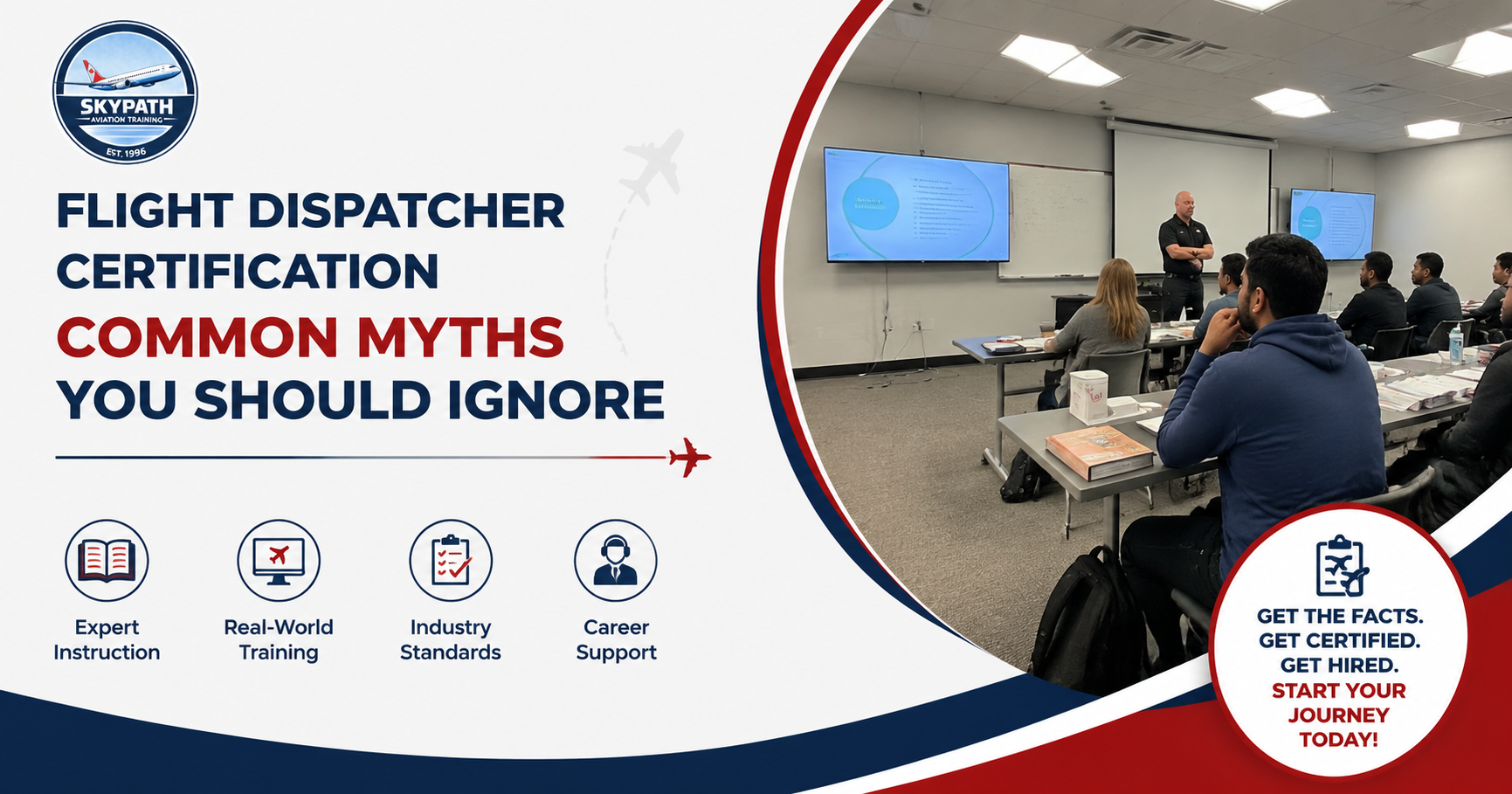
Instead of chasing rumours, focus on the fundamentals: complete approved training, secure your Transport Canada file number early, and revise using realistic operational scenarios. Programmes such as Flight Dispatch Training, run through Skypath Aviation, build their courses around this exact preparation cycle rather than guesswork. Both exams are multiple-choice, and a 70% pass mark applies to each, so consistent preparation matters more than any myth floating around online forums.
Final Thoughts
Ignore the noise, and flight dispatcher certification in Canada looks far more approachable than the myths suggest. No pilot’s licence, no citizenship restriction, and no exam fees from Transport Canada itself — just structured preparation and genuine interest in airline operations. Flight Dispatch Training, delivered by Skypath Aviation, focuses on exactly that preparation, helping candidates walk into their exams ready rather than guessing.
FAQs
1. Do I need prior aviation experience for flight dispatcher certification in Canada?
No. Transport Canada doesn’t require prior aviation experience, a pilot’s licence, or a related degree before you attempt the FDOPS and FDMET exams. Approved training programmes are built for complete beginners and cover the operational, regulatory, and meteorological knowledge candidates need from the ground up, step by step.
2. What is the difference between the FDOPS and FDMET exams?
FDOPS focuses on flight operations, fuel planning, navigation, and Canadian aviation regulations, with roughly 80 exam questions in total. FDMET covers aviation meteorology, weather systems, and forecasting interpretation, with around 100 questions. Both use a multiple-choice format, run about 3.5 hours, and require a 70% pass mark.
3. Are Transport Canada flight dispatcher exams open to international students?
Yes. International applicants can complete approved training and write the required examinations, exactly the same as Canadian candidates. You’ll need a Transport Canada file number first, which links your identification to the official examination system before you can schedule either the FDOPS or FDMET exam.
4. Does Transport Canada charge exam fees for dispatcher certification?
No, Transport Canada doesn’t charge fees for the FDOPS or FDMET exams themselves. Most of your budget goes toward approved training and, depending on where you live, travel to an examination centre, rather than the exams. This makes dispatcher exams Canada-wide more affordable than many people assume.
5. Where can I write the Transport Canada flight dispatcher exams?
Examination centres are spread across the country, including Ontario, the Atlantic provinces, the Prairies, the North, and Quebec. Cities range from Toronto and Ottawa to Winnipeg, Edmonton, and Dorval, so candidates outside major hubs still have reasonably local options for sitting their FDOPS and FDMET exams.