- By flightdispatchtraining
- November 3, 2026
- Comments (0)
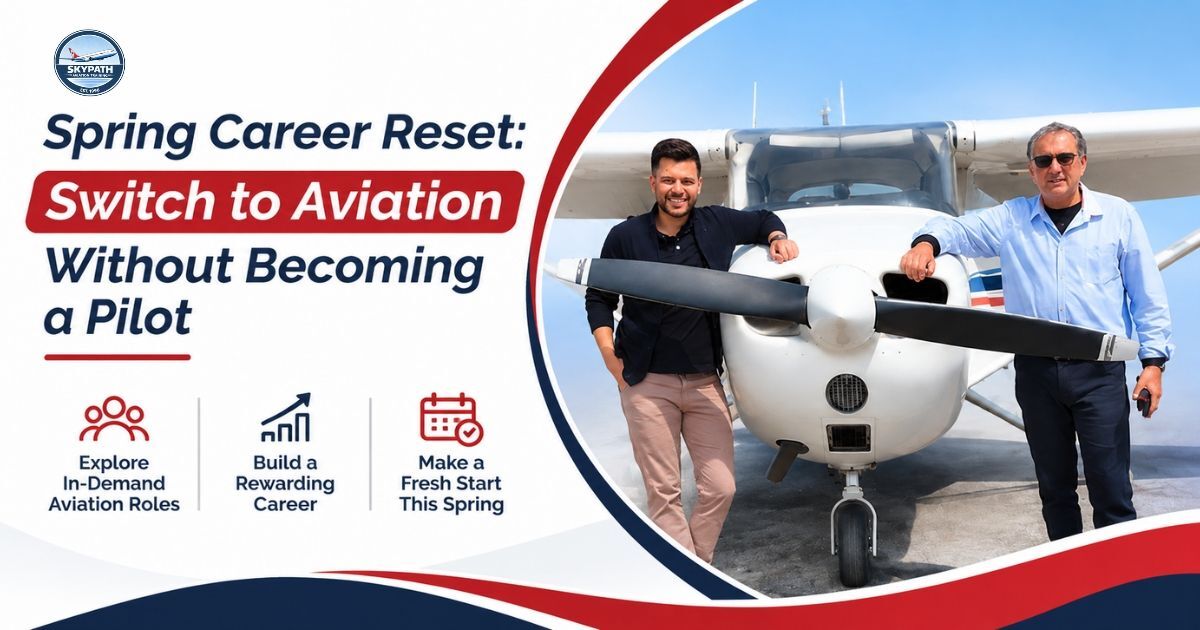
Spring has a way of making people look hard at their jobs. The days get longer, and the same old desk starts to feel smaller.
Maybe you’ve always loved airports but never wanted to fly the plane. Good news: aviation careers without being a pilot are real, skilled and in demand.
You don’t need a cockpit to work in aviation. You need the right role and the right training.
Can You Work in Aviation Without Flying? A Quick Answer on Non-Pilot Aviation Careers
Yes. Non-pilot aviation careers include flight dispatch, aircraft maintenance, air traffic control, crew scheduling and cabin crew. Many need focused training rather than a degree. Flight dispatch, for example, can start with a short course and Transport Canada exams. Best of all, these aviation careers without being a pilot skip the heavy cost of flight school.
Why Airline Careers Are Growing Beyond the Cockpit?
Boeing’s 2026 Pilot and Technician Outlook expects the industry to need about 2.4 million new aviation professionals over the next 20 years.
Only 674,000 of those are pilots. The other 1.75 million or so are maintenance technicians and cabin crew.
That forecast doesn’t even count dispatchers, schedulers or ground teams. So airline careers clearly run far deeper than the flight deck, and so do aviation careers without being a pilot.
Five Ground-Based Aviation Opportunities Worth a Look
- Flight dispatcher: plans routes, checks weather and fuel, and works with the captain to approve each flight
- Aircraft maintenance engineer (AME): inspects and signs off aircraft, which in Canada needs a Transport Canada license
- Air traffic controller: guides aircraft safely through busy airspace, with training run by NAV CANADA
- Crew scheduler: keeps pilots and cabin crew where they need to be, within duty-time rules
- Cabin crew: looks after passenger safety on board
Each of these aviation opportunities suits a different kind of person. Calm problem-solvers often love dispatch. Hands-on people usually lean toward maintenance.
Not sure where you fit? Think about how you handle pressure, and whether you’d rather work with people, data or machines. There’s no single route into aviation careers without being a pilot, and honestly, that’s the good part.
How to Start Aviation Training in Canada Without a Pilot License?
Here’s what most people exploring aviation careers without being a pilot don’t realize. Some of these roles are quicker to enter than they look.
Flight dispatch is a good example. Aviation training in Canada for dispatchers prepares you for two Transport Canada exams: FDOPS (operations) and FDMET (meteorology). Airlines then train new hires on their own procedures, and some advertise dispatcher-in-training roles.
Skypath Aviation Training runs this kind of classroom program in Markham, Ontario, built around real operational case studies.
Before you sign up for any aviation training in Canada, ask:
- Who teaches it, and what industry experience do they have?
- Which exams does it actually prepare you for?
- Are you legally able to study and work in Canada?
It’s also worth reading about the flight dispatcher career path in Canada before you decide.
Your Next Chapter Could Start on the Ground
A career reset doesn’t have to be a dramatic leap. Sometimes it’s one sideways step into an industry you’ve always admired.
Aviation careers without being a pilot put you at the heart of every takeoff, without holding the controls. And the demand for skilled people isn’t slowing.
If dispatch sounds like your kind of challenge, Flight Dispatch Training can help you take that first step. Check the next intake, and make this spring the one you finally moved.
FAQs
1. What aviation jobs can I do without being a pilot?
Plenty. Non-pilot aviation careers include flight dispatcher, aircraft maintenance engineer, air traffic controller, crew scheduler, cabin crew and airport operations roles. Each needs different training, so pick one that matches your strengths, interests and how much time you can commit.
2. How long does flight dispatcher training take in Canada?
Classroom courses can be as short as one week. After that, you’ll sit Transport Canada exams and complete training with the airline that hires you. The full journey varies, depending on your study pace and how quickly you find work.
3. Do I need a degree to work in aviation?
Not always. Many airline careers, including dispatch, crew scheduling and cabin crew, value focused training and practical skills over a university degree. Maintenance and air traffic control have their own licensing and selection routes, so check each role’s requirements first.
4. Is it too late to switch to aviation in my 30s or 40s?
No. Plenty of people successfully move into aviation mid-career. Experience in logistics, customer service or operations often transfers really well. Ground-based aviation opportunities like dispatch reward calm judgment and attention to detail, which usually grow stronger with age and experience.
5. Can international students take a flight dispatch course in Canada?
Usually only if they already hold valid Canadian immigration status, such as a study permit, work permit or visitor visa. A short course alone won’t qualify you for a visa, so always confirm your status with the provider before registering.