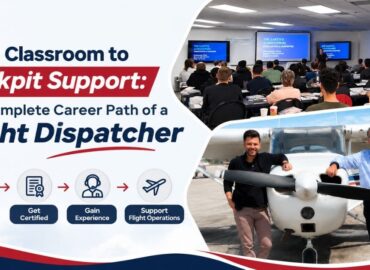
- By flightdispatchtraining
- November 4, 2026
- Comments (0)
It’s a Friday morning in July. Gates are packed, departure boards are full, and a line of storms is building west of the airport. Passengers worry about their connections.
Far from the terminal, someone has been watching that storm for hours. The flight dispatcher has already planned new routes and extra fuel.
Most travelers never meet this person. Yet flight dispatcher job responsibilities touch every flight, and they matter most when the summer rush hits.
What Does a Flight Dispatcher Do to Keep Peak-Season Flights Safe?
What does a flight dispatcher do? They plan each flight’s route, fuel and timing, check weather and airspace notices, and release the flight together with the captain. Once it departs, they track it in real time and adjust plans when storms or delays strike.
Why Summer Travel Puts Extra Pressure on Airline Operations?
Air travel keeps growing. In its June 2026 industry outlook, IATA forecasts 5.1 billion passengers in 2026 and a record 84% load factor.
Fuller planes leave less room for error. IATA also expects jet fuel to average $152 per barrel in 2026, up almost 70% in 2025. Every extra pound of fuel now costs more.
Summer squeezes all of this into a few busy months. That is when sharp dispatch planning matters most.
Core Flight Dispatcher Job Responsibilities in the Airline Operations Centre
Dispatchers work from the airline operations centre, the hub that coordinates crews, aircraft and schedules. The key flight dispatcher job responsibilities include:
- Weather analysis: reviewing forecasts, thunderstorms, turbulence and icing along the route
- NOTAM checks: reading notices about closed runways, airspace limits or faulty navigation aids
- Fuel planning: calculating trip fuel plus reserves and alternate airport fuel
- Aircraft status: confirming any deferred defects allow the flight to go
- Flight following: monitoring flights en route and alerting crews to changes
Inside the Flight Planning Process, Step by Step
The flight planning process starts hours before boarding. The dispatcher studies the weather and picks the safest, most efficient route.
Next, they work out fuel, payload limits and an alternate airport. They then build the flight plan and file it with air traffic services.
Finally, they brief the captain. Both review the plan, and the flight leaves only when they agree. In summer, this flight planning process may repeat several times as conditions change.
How Aviation Safety Procedures Shape Every Dispatch Decision?
At many airlines, the dispatcher and captain share responsibility for the flight’s safety. That shared control is one of the most important aviation safety procedures in commercial flying.
If the weather turns, a dispatcher can recommend a delay, a reroute or a diversion. Saying “not yet” is part of the job, even on a crowded holiday weekend.
Strong safety procedures also cover crew duty limits and backup plans for every flight. This is how flight dispatcher job responsibilities protect passengers when the pressure is highest.
Skills That Help Dispatchers Handle the Rush
Good dispatchers stay calm, think fast and communicate clearly. They also need deep knowledge of meteorology, navigation and aviation law.
In Canada, candidates prepare for the Transport Canada FDOPS (operations) and FDMET (meteorology) exams. Skypath Aviation Training trains students for both through its intensive classroom program in Markham, Ontario.
Behind Every Smooth Takeoff Is a Dispatcher Who Planned It
When your summer flight lands on time, thank the pilots and the crew. But remember the dispatcher who planned for the storm before you even packed.
If you want to take on these flight dispatcher job responsibilities yourself, Flight Dispatch Training can help you start. Explore the flight dispatcher course and get ready for a career that keeps the skies moving.
FAQs
1. What qualifications do you need to become a flight dispatcher in Canada?
Most candidates pass Transport Canada’s FDOPS and FDMET exams first. They then complete airline-specific training and supervised work before dispatching on their own. A strong grasp of weather, navigation, aircraft performance and aviation regulations is essential throughout the whole process.
2. What does a flight dispatcher do on a typical shift?
A typical shift covers the core flight dispatcher job responsibilities: checking weather, reading NOTAMs, planning fuel, building flight plans and briefing captains. Dispatchers also monitor several flights at once and update crews by radio or datalink whenever conditions change mid-route.
3. Is a flight dispatcher the same as an air traffic controller?
No. Air traffic controllers separate and guide all aircraft in their assigned airspace. Dispatchers work for one airline inside its airline operations centre, planning that airline’s own flights and supporting its crews from before departure until the aircraft lands safely.
4. Can a flight dispatcher delay or cancel a flight?
Yes, at many airlines. Under shared operational control, the dispatcher and captain must both agree a flight is safe. By following strict aviation safety procedures, a dispatcher can hold, reroute or recommend cancelling a flight when risks are too high.
5. Is flight dispatching a stressful job?
It can be, especially during summer peaks and bad weather. Dispatchers often juggle several flights and very tight deadlines. Still, many enjoy the challenge, the teamwork and the satisfaction of knowing their planning keeps thousands of passengers safe every day.