- By flightdispatchtraining
- October 28, 2026
- Comments (0)
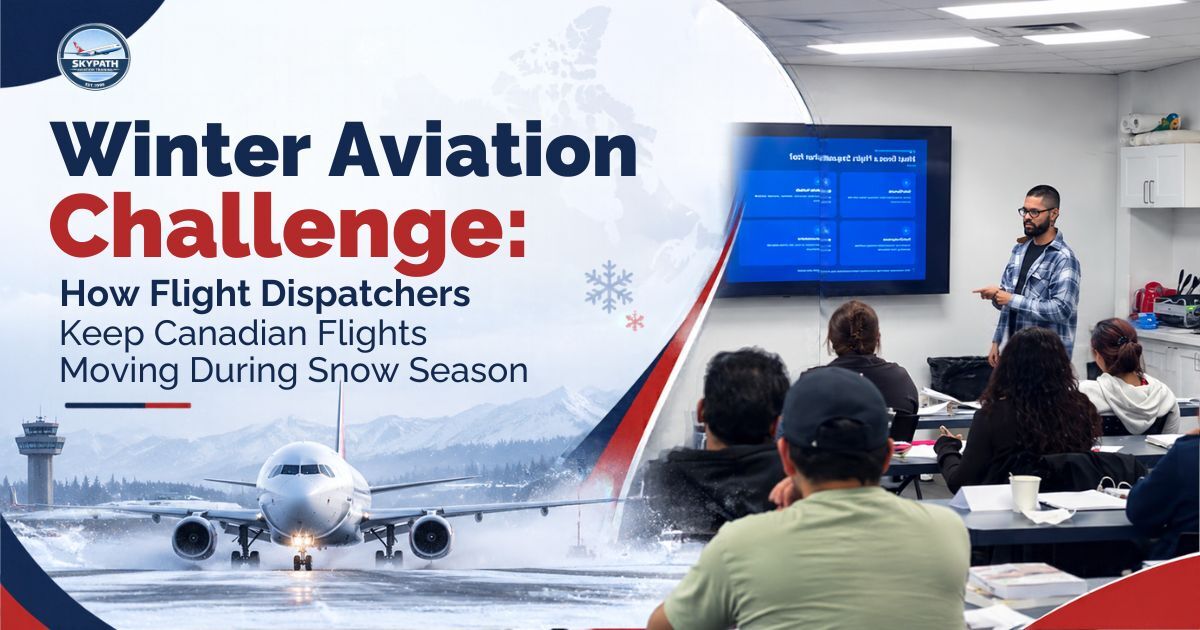
Snow in Canada isn’t an occasional event. Across much of the country, it’s a season that lasts for months, and every airline schedule has to bend around it.
Passengers notice the de-icing trucks and the snowploughs. What they rarely see is the dispatcher in the operations centre, weighing forecasts, fuel and runway reports before a single engine starts.
That quiet planning sits at the core of flight dispatcher winter operations. It’s also the reason most winter flights still get off the ground.
Winter Operations for Flight Dispatchers: What Keeps Planes Flying Through Snow
Flight dispatcher winter operations cover icing forecasts, fuel and alternate planning for snow, de-icing delays and real-time flight watch. At airlines using a co-authority system, dispatchers share operational control with the captain, so they can delay, reroute or divert a flight when conditions turn.
Reading Aviation Weather in Canada Before the Snow Arrives
Good winter decisions start hours before departure. Dispatchers pull aviation weather in Canada from NAV CANADA, including METARs, TAFs and the Graphic Area Forecast, which shows icing, turbulence and freezing levels.
Timing is the tricky part. A TAF might call for light snow by evening, but a freezing drizzle showing up an hour early changes everything. That’s why flight dispatcher winter operations depend on reading trends, not single snapshots.
Pilot reports fill the gaps. One crew reporting moderate icing on descent can reshape the plan for every flight behind it.
Winter Flight Planning: Fuel, Alternates and De-icing Time
Winter flight planning is mostly about building margins. Snow-covered runways lengthen landing distances, so a dispatcher may pick an alternate with longer runways or better snow clearing.
Fuel follows the same logic. Extra holding, slow taxiing and possible diversions all go into the operational flight plan, which the dispatcher and captain both approve.
De-icing adds another layer. CAR 602.11 bans take-off with frost, ice or snow on critical surfaces, known as the clean aircraft concept. Dispatchers factor in holdover times from Transport Canada’s Holdover Time Guidelines, reissued every year. The Winter 2026-2027 edition came out in August 2026.
Flight Dispatch Responsibilities Once the Aircraft Is Airborne
Releasing a flight isn’t the end of the job. Flight dispatch responsibilities continue through flight watch, as dispatchers track weather, runway condition reports and NOTAMs along the route.
If the destination drops below landing minimums, the dispatcher sends fresh aviation weather in Canada updates and options to the crew. Together, they decide whether to hold, divert or carry on.
Good flight dispatcher winter operations depend on that teamwork, since neither side has the full picture alone.
Why Snow Season Puts Airline Operations in Canada to the Test?
Geography makes Canadian winters tougher than most. The Transportation Safety Board of Canada notes that many remote northern airports have an icing season of 10 months or more.
For airline operations in Canada, one storm can ripple across an entire network. A late aircraft in Halifax might be due in Calgary that evening, so dispatchers juggle crew limits and swaps too.
In the North, flight dispatcher winter operations also mean confirming that de-icing equipment is actually available at the destination. It’s a reminder that flight dispatch responsibilities stretch well beyond the weather chart.
Clear Skies Ahead: Building the Skills Canadian Winters Demand
The snow season will always test Canadian aviation. Preparation is what changes the outcome.
If that kind of work appeals to you, Flight Dispatch Training offers an intensive program built around the Transport Canada FDOPS and FDMET exams. Delivered by Skypath Aviation Training, it develops the practical skills behind flight dispatcher winter operations, from forecast interpretation to winter flight planning.
It’s a direct route into airline operations in Canada, ready for the next storm.
FAQs
1. What does a flight dispatcher do during winter in Canada?
In winter, flight dispatch responsibilities grow heavier. Dispatchers study icing and snow forecasts, add fuel for holding and diversions, choose alternates with suitable runways and allow for de-icing delays. Once a flight departs, they keep monitoring conditions and update the crew whenever something changes along the route.
2. Who decides whether a flight is cancelled because of snow?
It’s rarely one person’s call. The dispatcher and captain weigh forecasts, runway condition reports, airport capacity, de-icing availability and crew duty limits together. If conditions fall below safe limits, or the aircraft can’t be kept free of ice, the flight is delayed, rerouted or cancelled.
3. Which weather sources do Canadian flight dispatchers rely on?
Most start with NAV CANADA’s aviation weather in Canada products: METARs, TAFs, the Graphic Area Forecast, SIGMETs, AIRMETs and pilot reports. Many airlines layer commercial weather tools on top. The real skill lies in seeing how these sources fit together, rather than trusting any single forecast.
4. Are flight dispatchers responsible for de-icing aircraft?
Not directly. Ground crews do the spraying, and the captain confirms the aircraft is clean before take-off. Dispatchers build expected de-icing delays into winter flight planning, coordinating timing and fuel so a flight doesn’t run past its holdover time while waiting in line for departure.
5. How can I become a flight dispatcher in Canada?
You’ll need to pass Transport Canada’s FDOPS and FDMET written exams, then complete an air operator’s approved training program and qualify on that particular airline’s own procedures. A focused preparation course helps you cover meteorology, regulations and flight planning efficiently before you sit the exams.