- By flightdispatchtraining
- September 14, 2026
- Comments (0)
Plenty of aspiring aviation professionals assume a pilot’s seat is the only serious way into the industry. A flight dispatcher licence in Canada opens a different, safety-critical door instead, one where you share legal responsibility for every flight you release without ever leaving the ground.
What Does It Actually Take to Get Licensed as a Dispatcher in Canada?
Candidates must be at least 21 years old, fluent in English or French, and must pass Transport Canada’s two generic examinations, FDOPS and FDMET, before completing operator-specific training. Only then can Transport Canada issue the full flight dispatcher licence in Canada that lets someone legally release commercial flights.
Why the Role Carries Real Legal Weight?
A flight dispatcher shares joint authority with the captain over whether a flight departs, under Canadian aviation regulations. That’s not a title handed out after a short course; it reflects genuine operational accountability for fuel planning, weather risk and route decisions.
This is precisely why the licensing process exists. Airlines can’t simply hire someone who “understands operations” and trust the rest to on-the-job learning alone.
The Two Exams Behind Every Transport Canada Dispatcher License
The Transport Canada flight dispatcher exams consist of FDOPS and FDMET. FDOPS runs eighty questions across three and a half hours, covering regulations, aircraft performance, navigation, radio aids and flight planning, with a seventy percent pass mark.
FDMET follows the same format across one hundred meteorology questions, testing atmospheric pressure, turbulence, icing, fronts and aviation weather interpretation. Passing both dispatcher exams Canada requires is the mandatory gateway before any operator will consider you.
Why a Certificate of Training Isn’t the Same as a Licence?
Completing a preparation course teaches the material, but it doesn’t grant authority to dispatch flights. Only Transport Canada’s own examinations, followed by supervised operator-specific training, lead to an actual transport Canada dispatcher license.
Some candidates mistakenly believe finishing classroom hours is the finish line. In reality, the exams themselves, plus a radio operator permit, still stand between training and employment.
The Radio Permit Most Beginners Overlook
Alongside the written exams, dispatchers need an Aeronautical Restricted Radio Operator’s Permit to legally operate radio equipment on the job. It’s inexpensive, valid for life, and easy to arrange through an authorised examiner, yet it’s often forgotten until late in preparation.
Building this into your study plan early avoids a last-minute scramble before operator-specific training begins.
Where the Licence Actually Takes You?
Once licensed, career paths extend well beyond a single airline’s operations desk. Systems operations control, flight following, crew scheduling support and operational coordination roles all draw on the same foundational flight dispatcher licence in Canada.
Demand across Canadian carriers has stayed steady, since every commercial flight legally requires either a dispatcher or an approved flight-following system behind it.
Preparing Properly Instead of Rushing the Exams
Given the pass mark and breadth of material, treating preparation lightly is a common, costly mistake. Structured instruction covering meteorology, regulations and operational procedures together tends to outperform self-study alone.
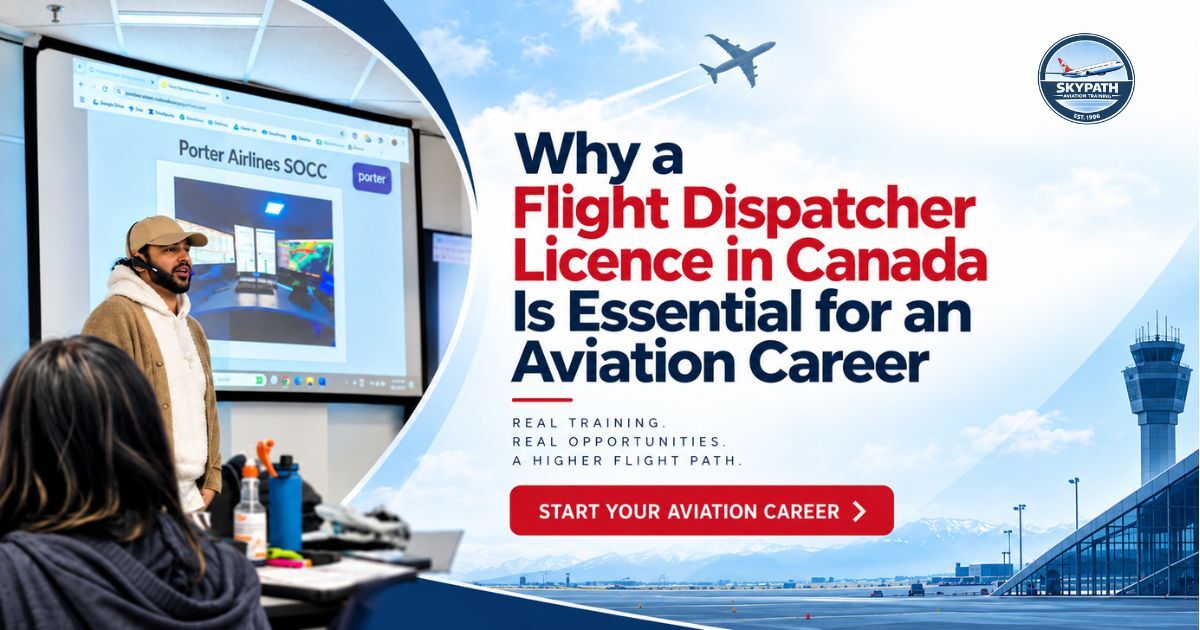
Skypath Aviation built its own programme around exactly this gap, combining classroom instruction with focused Transport Canada exam preparation rather than generic aviation theory.
Your Runway Into a Genuine Aviation Career
A flight dispatcher licence in Canada isn’t a formality bolted onto a training certificate; it’s the actual legal credential that lets you share responsibility for flights alongside qualified captains.
Flight Dispatch Training prepares candidates specifically for the FDOPS and FDMET examinations, so the path from classroom to a genuine, licensed aviation career stays realistic rather than aspirational.
FAQs
1. How long does it take to get a flight dispatcher licence in Canada?
Most candidates complete generic exam preparation within one to a few weeks, though some intensive courses run in as little as six days of classroom instruction. After passing the flight dispatcher licence in Canada exams, operator-specific training adds further weeks before Transport Canada issues the full licence.
2. What subjects do the transport Canada flight dispatcher exams cover?
The transport Canada flight dispatcher exams cover two distinct areas. FDOPS tests regulations, aircraft performance, navigation, radio aids and flight planning across eighty questions. FDMET tests aviation meteorology in depth, including turbulence, icing, fronts and weather interpretation, across one hundred questions, each demanding a seventy percent pass mark.
3. Can I become a dispatcher without a university degree?
Yes, a university degree isn’t required to sit the dispatcher exams Canada administers, though candidates must be at least twenty-one and fluent in either English or French. Structured preparation courses, rather than a formal degree programme, are the more common route most working Canadian dispatchers take today.
4. Is a flight dispatcher licence the same as a pilot's licence?
No, they’re entirely separate credentials with different responsibilities. A pilot’s licence covers hands-on aircraft handling, while a transport Canada dispatcher license covers ground-based operational control, fuel and route planning, and shared legal authority over release decisions, working alongside pilots rather than replacing their in-flight duties.
5. What happens after passing the generic Transport Canada exams?
Passing FDOPS and FDMET alone doesn’t complete certification. Candidates must still finish air-operator-specific training approved by Transport Canada, covering that particular carrier’s procedures, aircraft types and dispatch systems, before finally receiving the full licence required to release commercial flights independently, legally and with genuine operational confidence.